
The Double Diamond Design Process
In the world of UX design and digital product development, one of the most appreciated and used method is the Double Diamond design process. A well-structured design process, essential to ensure effective and high-quality results. In this article, besides exploring this approach in detail and explaining each phase, we also want to provide practical examples of how to apply it in a project. We take into consideration the developing of an app dedicated to tracking sports activities. Enough intro, let's dive in and start with the basics.
What is the Double Diamond Design Process?
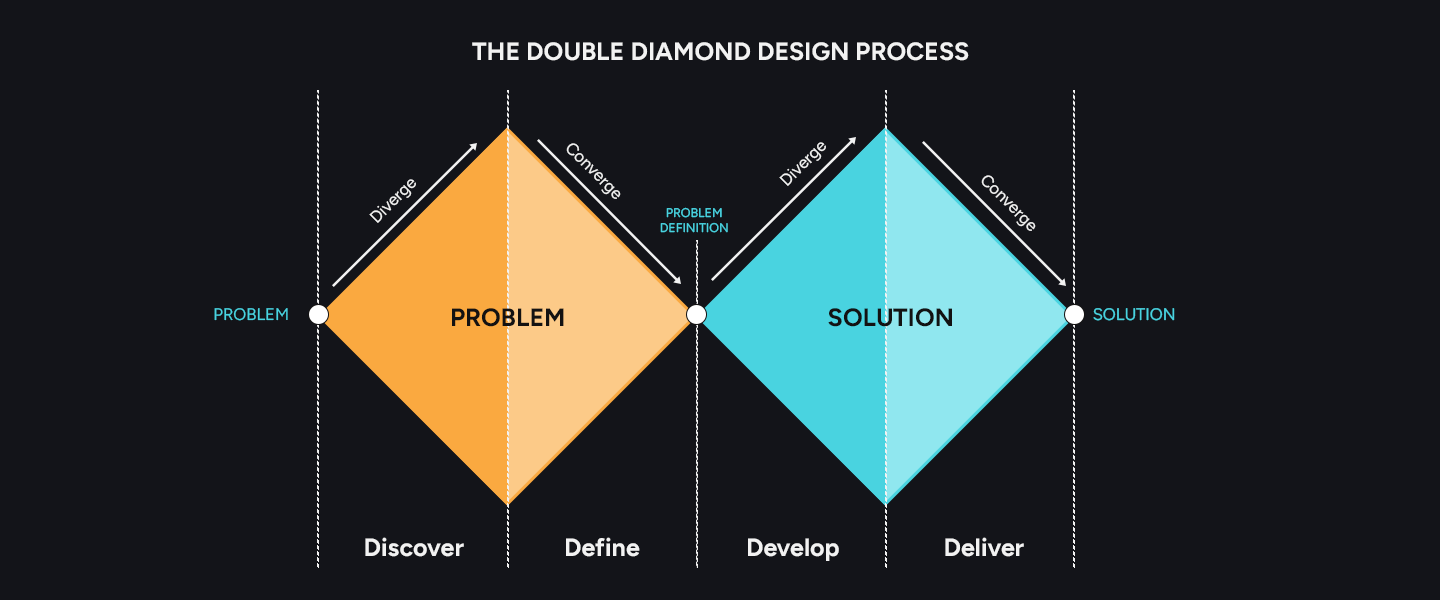
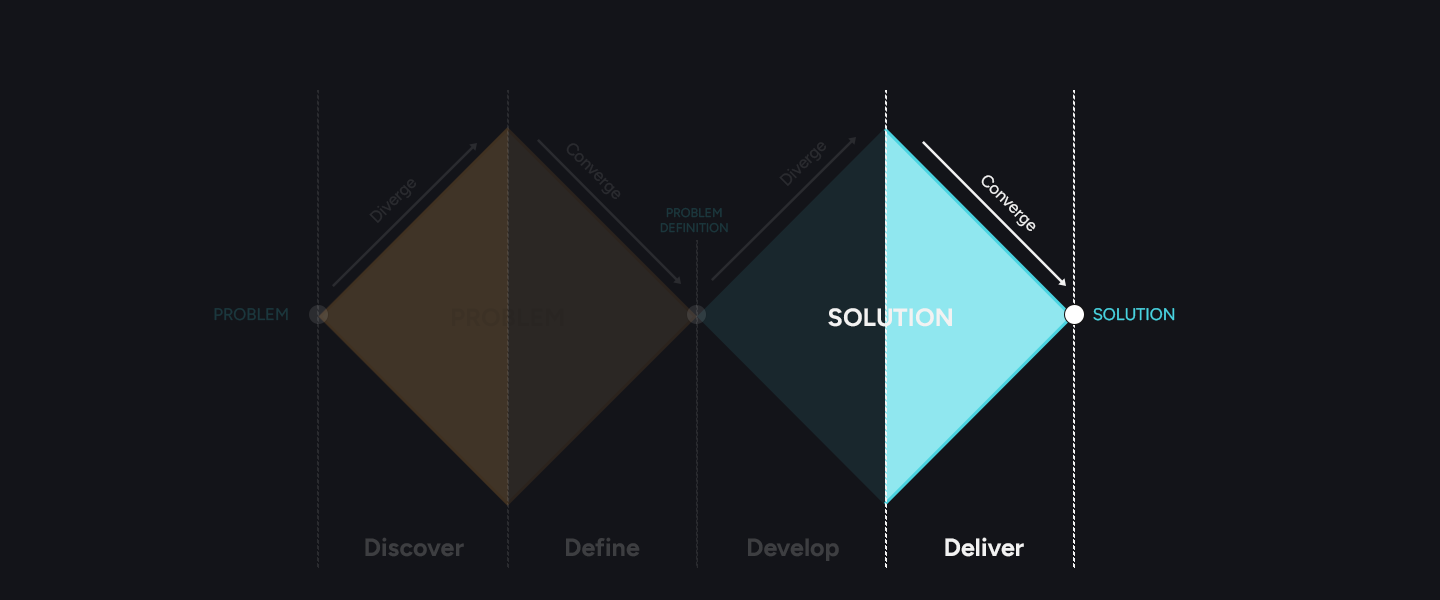
The Double Diamond is a method created by the Design Council in 2005 that divides the design process into four main phases: Discover, Define, Develop, and Deliver. These phases are organised into two consecutive diamonds (see the orange and blue shapes in the image below) representing the divergence and convergence of ideas and solutions.
Structure of the Double Diamond
- Discover
- Define
- Develop
- Deliver
Each phase has a specific focus that helps guide the design team through a process of exploration and refinement of ideas.
Phase 1: Discover
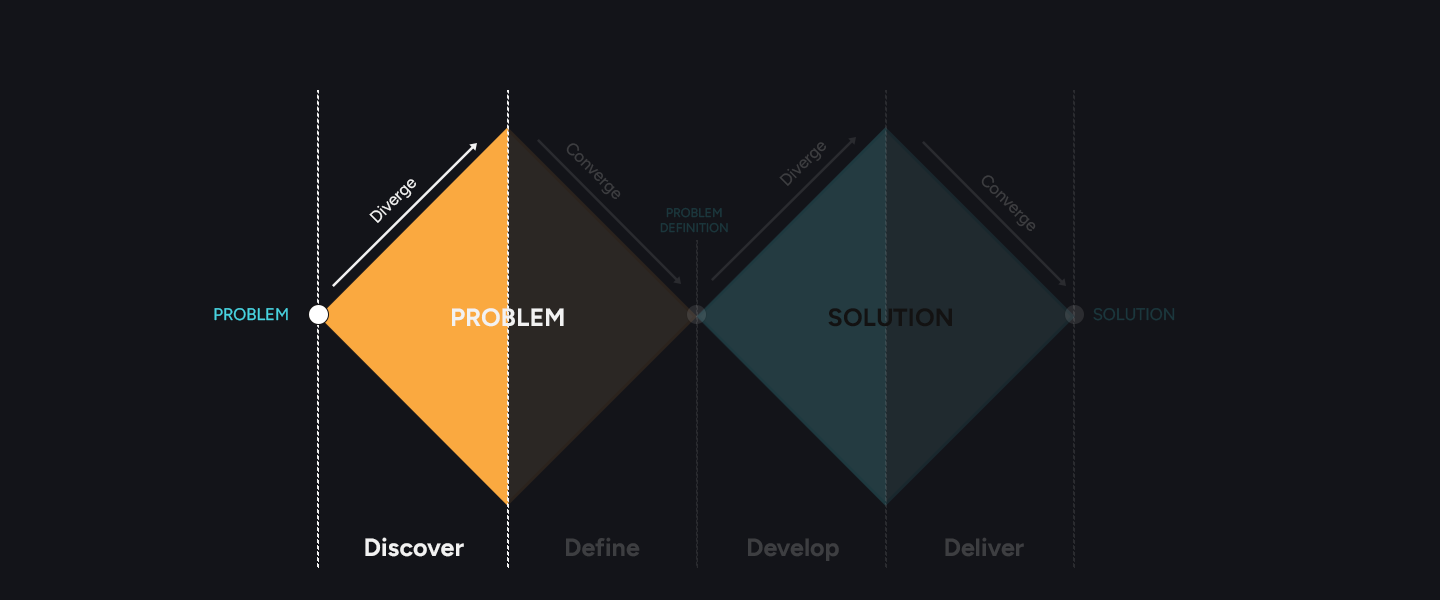
The discovery phase is dedicated to the exploration of the problem. The goal is to gather as much information as possible to fully understand the context and the users' needs. This phase is crucial because it lays the foundation for all subsequent work. A good discovery can make the difference between a successful project and one that fails to meet user expectations.
Main Activities of the Discover Phase
- Fundamental Research: During this activity, you conduct interviews with users to understand their needs, habits, and pain points. Surveys can help gather quantitative data from a larger sample, while analyzing existing data can provide useful insights already available within the organization.
- Competitor Analysis: Studying the existing solutions in the market is essential to understand what works and what doesn't. This study allows you to identify opportunities for improvement and innovation, avoiding the repetition of mistakes made by others.
- User Journey Mapping: Creating user journey maps means visualizing step-by-step how a user interacts with the product or service. This tool is essential for identifying critical points and moments of frustration, as well as highlighting opportunities to improve the overall experience.
Example
In our project to develop an app dedicated to tracking sports activities, the discovery phase might include several specific steps:
- User Interviews: Talking directly with athletes, both professionals and amateurs, to understand their specific needs. For instance, they might look for an app that offers detailed performance analysis, the ability to compare results with friends, or an interface that is easy to use during workouts.
- Online Surveys: Distributing questionnaires to a broad audience of sports enthusiasts to collect data on how they currently use tracking apps, which features they find most useful, and which problems they encounter most frequently.
- Analysis of Existing Data: Examining reviews of competitor apps on online stores to identify perceived strengths and weaknesses. This analysis can reveal useful insights into what users like or dislike about current apps.
- Competitor Analysis: Studying the main sports activity tracking apps available in the market to understand what features they offer, how they are structured, and where there are opportunities for improvement. For example, it might emerge that none of the current apps offer good integration with wearable fitness devices.
- User Journey Mapping: Creating detailed user journey maps to visualize how an athlete interacts with the app before, during, and after the sporting activity. This helps identify potential problems or areas where the user experience can be improved.
Phase 2: Define
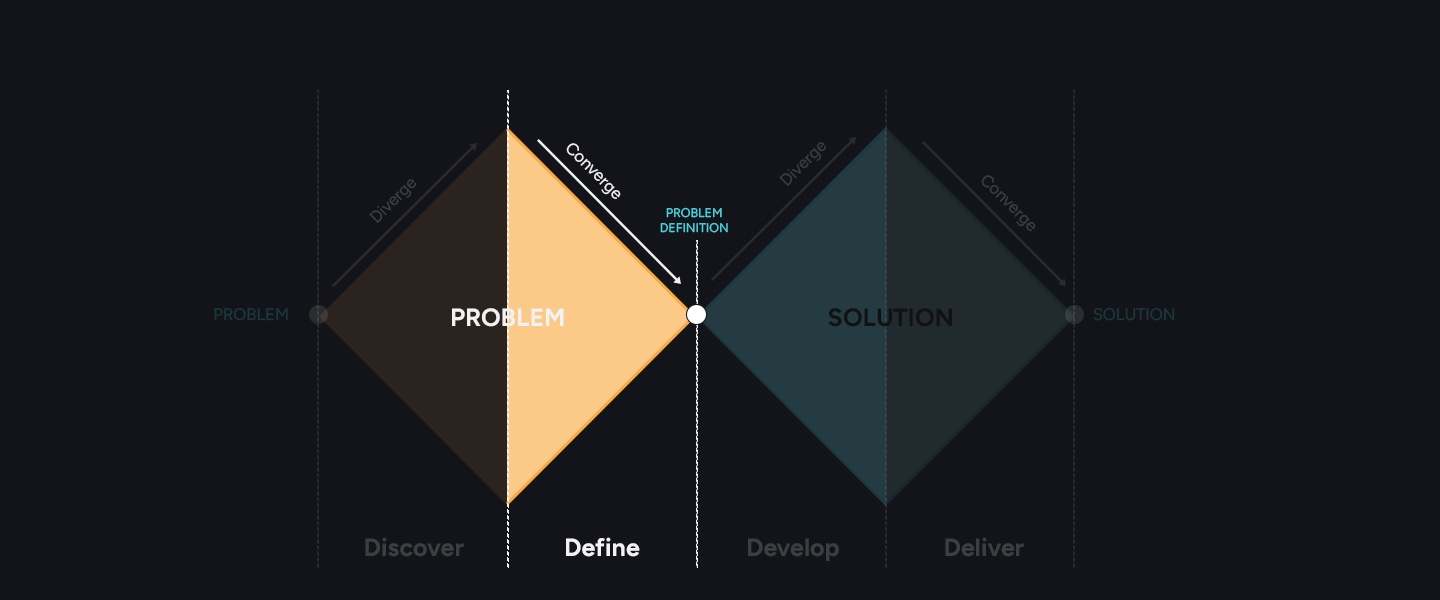
In the definition phase, the information gathered during the discovery phase is synthesized to clarify the problem and define the project specifications. This phase is crucial to transform the large amount of data collected into useful and actionable information that will guide the design process.
Main Activities of the Define Phase
- Data Synthesis: During this activity, the information collected is organized into themes and key insights. This process can include creating affinity diagrams to group similar data and identify emerging patterns.
- Problem Definition: A clear problem statement is essential to focus the design team's efforts. This statement should be specific and user-oriented, highlighting the main challenges and objectives to be achieved.
- Creation of Personas: Developing detailed user profiles that represent the different segments of target users. Personas help keep the user at the center of the design process, providing a clear understanding of their needs, behaviors, and motivations.
- Storyboarding and Scenarios: Visualizing user stories through storyboards and scenarios helps better understand how users will interact with the product in various contexts. This tool is useful for identifying potential problems and improving the user experience.
Example
Continuing with the example of the sports app, during the definition phase, the team might identify that the main need of users is to monitor their activities accurately and intuitively. The problem statement could be: "Users need a simple and accurate way to track and analyze their daily sports activities." Personas could include profiles such as "Luca, a 35-year-old amateur runner who wants to track his weekly progress" or "Sara, a 28-year-old professional cyclist who needs detailed performance analysis to improve her efficiency." By creating storyboards and scenarios, the team can visualize how Luca and Sara would use the app in different situations, identifying potential critical points in the user flow and making modifications to improve the overall experience.
Phase 3: Develop
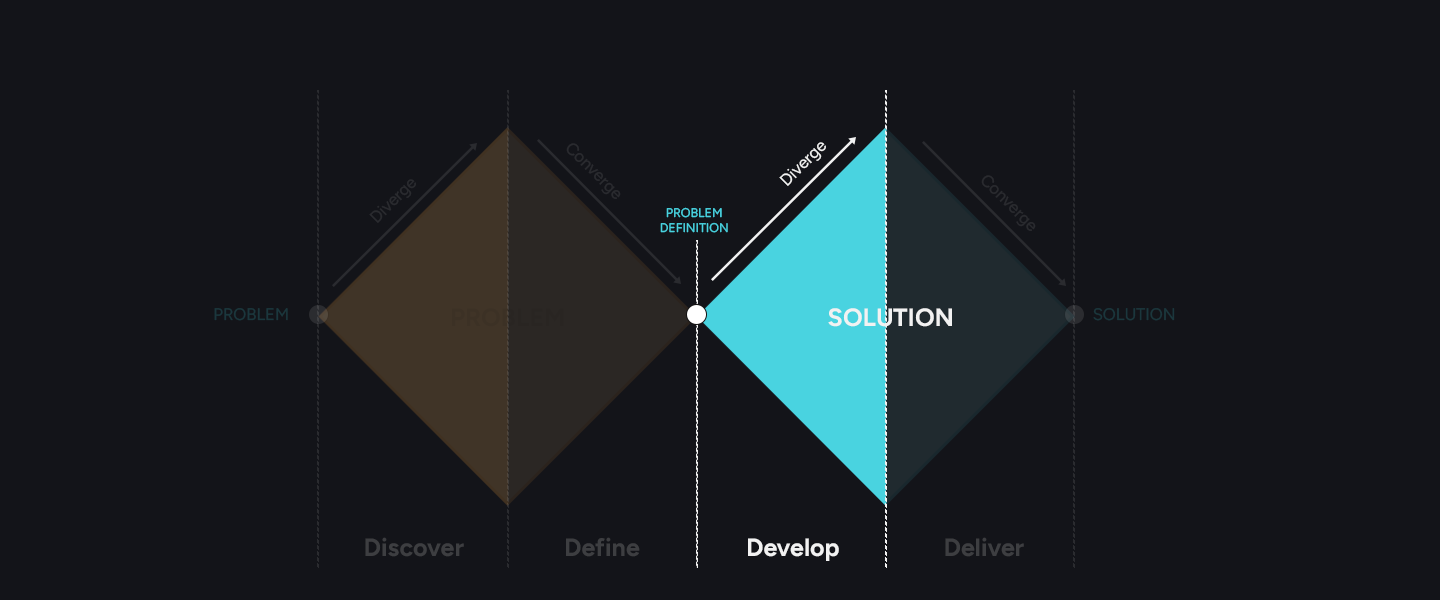
The development phase is the time to explore and create possible solutions. This phase is characterized by the generation of ideas and iteration. The goal is to develop several potential solutions that can be tested and improved based on user feedback.
Main Activities of the Develop Phase
- Brainstorming: Idea generation sessions to find creative solutions. During brainstorming, it is important to encourage all ideas, even those that seem less practical, as they can inspire innovative solutions.
- Wireframing: Creating low-fidelity sketches and prototypes to explore different solutions. Wireframes help visualize the structure and layout of the product without focusing on visual details.
- User Testing: Collecting feedback from users on prototypes to iterate and improve solutions. Tests can include usability sessions, A/B testing, or focus groups and are fundamental for identifying problems and opportunities for improvement.
Example
The team might create different versions of a new dashboard for activity tracking. These prototypes could be tested with a group of users to gather feedback on what works best and what could be improved. For instance, they might test different ways of visualizing training data, such as line graphs, tables, or interactive maps, to see which format users find most useful and intuitive. The feedback collected during these tests will allow the team to quickly iterate on designs, refining the product's features and usability. This iterative process helps ensure that the final product not only meets users' needs but also provides a pleasant and effective user experience.
Phase 4: Deliver
The delivery phase focuses on refining solutions and bringing them to market. This phase also includes preparing for launch and collecting feedback post-launch. The goal is to ensure that the final product is of high quality and meets user expectations.
Main Activities of the Deliver Phase
- High-Fidelity Mockups and Prototypes: Developing detailed prototypes that closely resemble the final product. These prototypes should include all visual and interactive elements, providing an accurate representation of what the final product will be like.
- Usability Testing: Conducting thorough tests to ensure the product is easy to use and meets the defined requirements. These tests can involve realistic usage scenarios and detailed user feedback to identify any remaining issues.
- Documentation: Creating detailed documentation to support the development team and ensure a smooth transition. This documentation should include technical specifications, style guides, and any other materials necessary for the proper implementation of the design.
Example
The team would finalize the design of the new activity tracking dashboard, thoroughly testing it with real users to ensure all features are intuitive and useful. Once satisfied with the design, the team would hand it over to developers for implementation. During this phase, it is essential to maintain close collaboration with the development team to resolve any technical issues and ensure the design is correctly implemented. After the launch, the team should continue to gather feedback from users and monitor usage metrics to identify further improvements. This iterative approach ensures that the product continues to evolve and improve over time, meeting the ever-changing needs of users.
As we have seen, the Double Diamond design process is a powerful tool for guiding design teams through the phases of exploration and definition, development, and delivery of innovative solutions. By following this model, designers can tackle complex problems in a structured and creative manner, achieving results that meet user and market needs. It's important to remember that the Double Diamond process is not rigid. It can and should be adapted based on the specific needs of the project and the working context. Flexibility is a key component of this model, allowing design teams to respond to the unique challenges of each project. The Double Diamond offers a solid framework, allowing you to adapt and customize the process for each project. With a deep understanding of each phase and the flexibility to adapt the process, you will be able to tackle any design challenge with confidence and competence. If you want to learn more about this process or need help implementing it in your project, contact us. We would be happy to help!